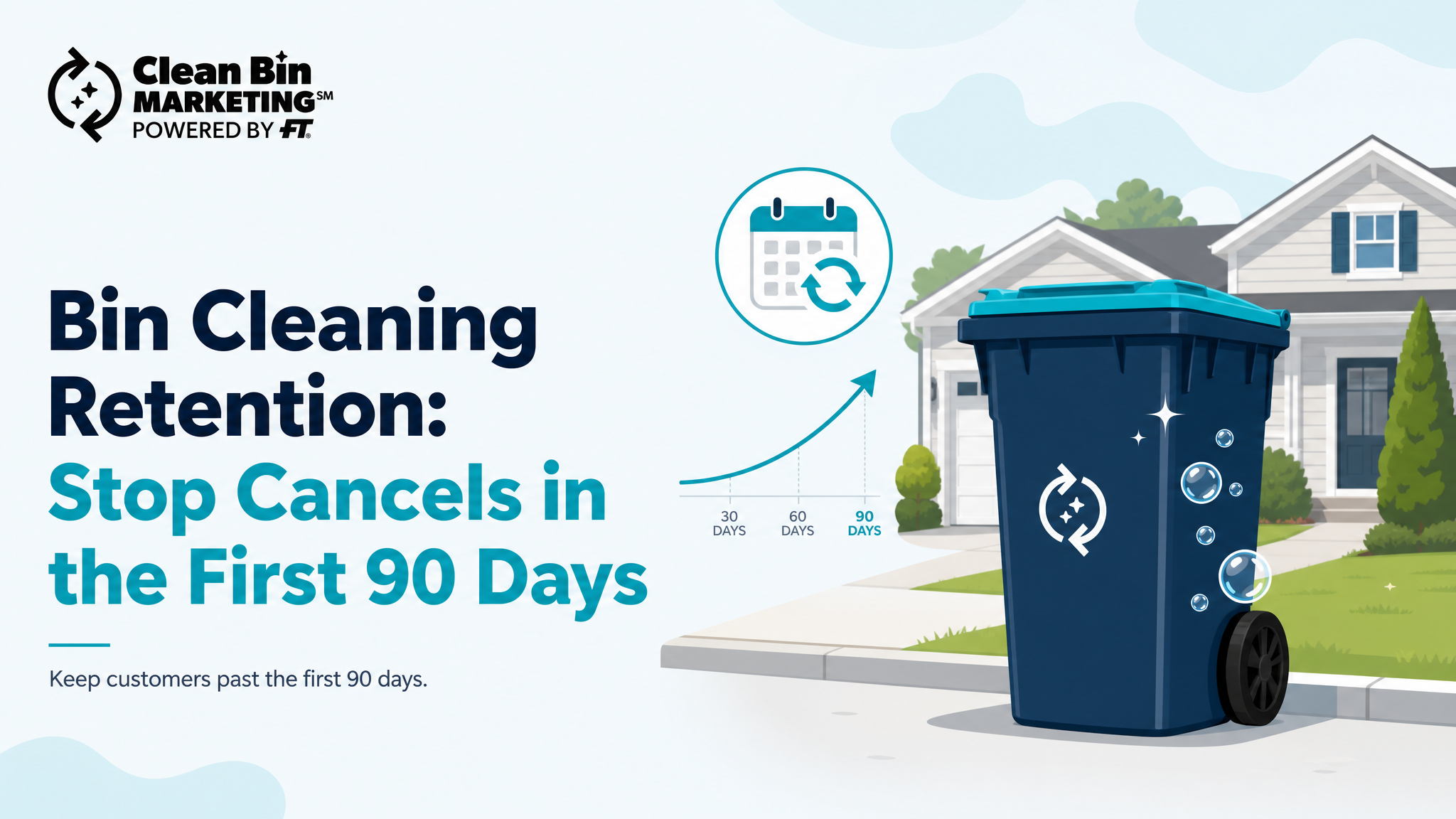
A homeowner signs up for monthly service in April, thrilled after that first fresh-smelling can. By July they’ve canceled, and your bin cleaning retention takes the hit. You did nothing wrong. The value just faded from memory. Most cancellations happen inside the first 90 days, before the habit sticks. Those early exits are also the most preventable ones you’ll face.
Why the First 90 Days Decide Your Bin Cleaning Retention
New subscribers are fragile. They signed up on a burst of motivation, usually after a gross bin or a spring pest scare. Once the smell is gone, so is the urgency. If nothing reminds them why they paid, canceling feels easy.
This is the retention trap. You spent real money and route time landing that customer, then risk losing them before they turn profitable. A single stop only pays off after several cycles. Churn in month two wipes out the acquisition cost entirely.
The math favors keeping people. The U.S. Small Business Administration points out that most companies pour their budgets into chasing new customers, even though existing ones drive the bulk of revenue, as covered in the SBA’s tips on marketing to existing customers. For a route-based cleaner, that lesson hits harder. Tight clusters of loyal subscribers are what make a truck profitable.
Seasonal timing makes this worse. A wave of spring signups looks great on paper, but that same wave hits its 90-day cliff in late summer, right when your schedule finally has room to breathe. Ignore those accounts and you’ll watch a chunk of them drop off at once. A strong first quarter beats a busy season that fizzles into a quiet fall. Treating those early months as their own project protects the revenue you worked hardest to win.
So the first 90 days aren’t about upselling. They’re about proving the value the customer already bought.
Your 90-Day Bin Cleaning Retention Playbook
Retention is a schedule, not a hope. Here’s a touchpoint plan you can run on autopilot with the right email marketing setup.
- Day 1: Confirm and welcome. The moment they book, send a friendly confirmation with their service date and what to expect. Set the tone early.
- After the first clean: Show the proof. Send a quick before-and-after photo. Nothing sells a clean bin like seeing the grime gone.
- Day 14: Check in. A short “how’d we do?” email invites a reply and catches small problems before they become cancel reasons.
- Day 30: Remind them it’s working. Right before the second visit, note the bacteria and odor you’re keeping out of their garage. Value they forgot, restated.
- Day 60: Ask for a review. Customers who write a review are far likelier to stay. You’re locking in their own commitment.
- Day 90: Reinforce the habit. Recap the three months of service and confirm the next quarter. By now, clean bins should feel normal to them.
Keep it simple. Six messages over three months. Each one connects the payment to a benefit they can see or smell, which is exactly how a route-based cleaner keeps a customer past the danger zone. Miss even two of these touchpoints and you leave the door open for a quiet cancellation you never see coming.
How Specialized Marketing Fuels Growth
Retention runs on consistent follow-up, and follow-up is hard when you’re on a truck all day. That’s the gap a specialized partner fills.
A generic agency treats your business like any other service company. A specialist understands route density, quarterly billing cycles, and the exact window where subscribers bail. That context shapes every message. Clean Bin Marketing builds the marketing engine behind your subscriptions: automated email sequences, review requests, and reminders that run without you touching them. Our all-in-one marketing programs handle the outreach while you handle the routes.
You set your plans and pricing. We keep the customers you win engaged long enough to stay. The result is steadier revenue you can plan around, instead of a subscriber base that leaks a little every quarter. That division of labor is the point.
Frequently Asked Questions
Q: When do most bin cleaning subscribers cancel? A: Usually within the first three months, right after the initial problem is solved and the memory of the dirty bin fades. That’s why the 90-day window matters so much. Consistent touchpoints during this period do the heavy lifting for bin cleaning retention.
Q: How many emails should I send new subscribers? A: Around five to six across the first 90 days is plenty. You want enough to stay top of mind without feeling like spam. Space them around service dates so each message has a clear reason to exist.
Q: Should I offer a discount to stop a cancellation? A: Sometimes, but lead with value first. A quick call or a before-and-after photo often saves the account without cutting your margin. Save discounts for customers who truly can’t justify the cost, not every wobble.
Keep the Subscribers You Already Won
Winning a subscriber is expensive. Losing one in month two is worse. Strong bin cleaning retention turns those hard-won signups into the recurring revenue that keeps your trucks full through slow seasons. It starts with a simple, repeatable plan for the first 90 days.
Not sure what happens after someone signs up with you right now? That’s worth a look. Clean Bin Marketing offers a free, zero-obligation review of your marketing setup, including the follow-up that keeps subscribers from slipping away. Request your free consultation and let’s find the gaps before your next batch of spring signups starts canceling.