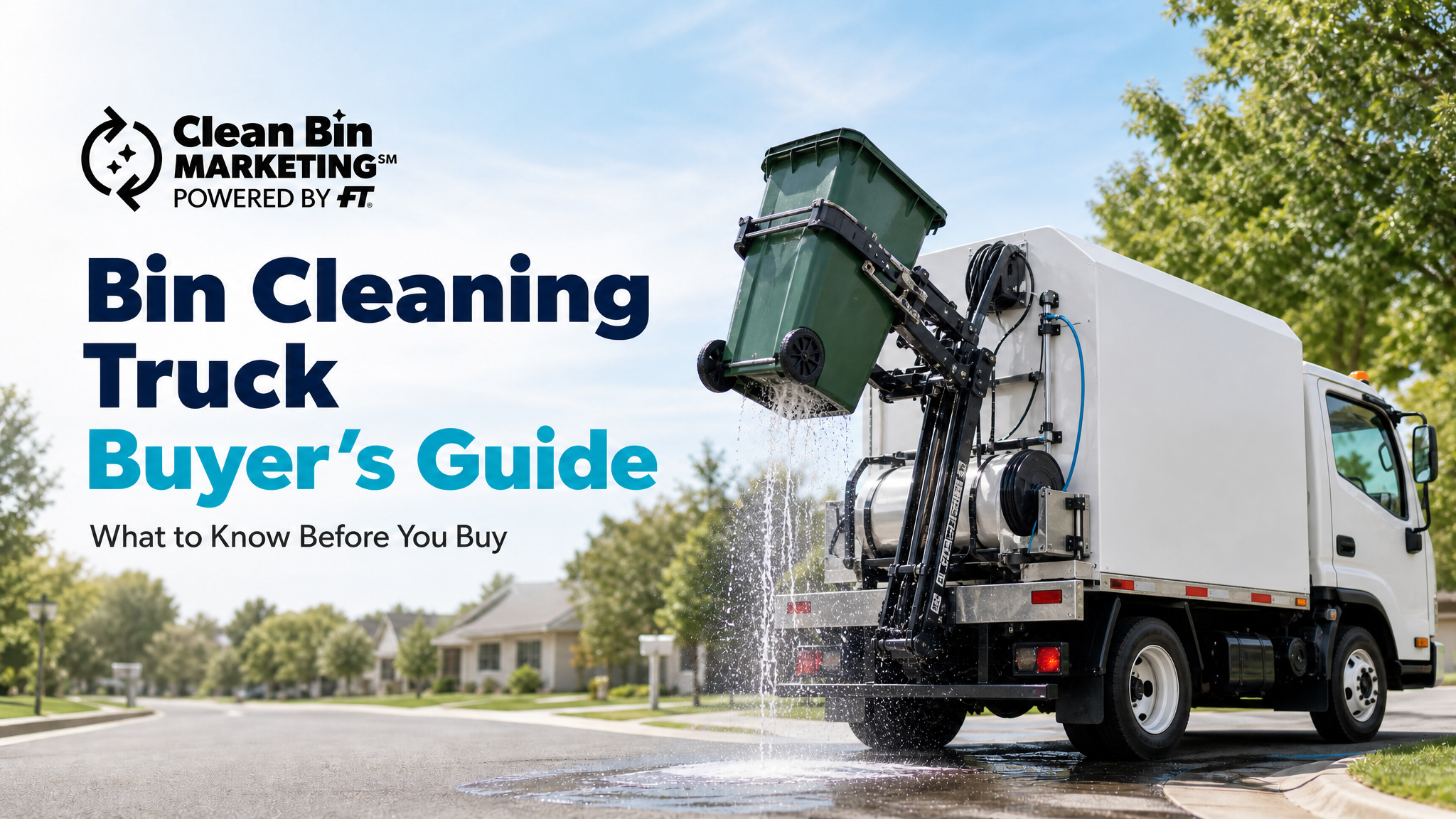
The bin cleaning truck is the single biggest purchase most operators make, and getting it wrong can lock up your cash for years. Whether you’re rolling out your first route or adding a second unit to keep up with spring bookings, the rig you choose sets your daily capacity, your water logistics, and your margins. This guide breaks down the real costs, the build options, and how to match a truck to the routes you actually run. A sharp truck decision pairs well with a plan to fill it, which is where smart digital marketing for bin cleaning businesses comes in later.
What a Bin Cleaning Truck Really Costs
Sticker shock is normal here. A fully built-out bin cleaning truck usually runs anywhere from $90,000 to $150,000 or more, depending on the chassis, tank size, and wash system. A trailer-based setup pulled behind a pickup you already own can bring that entry price down to the $20,000 to $50,000 range. That spread is the first real decision every owner faces.
The gap matters because your truck sets your ceiling. A high-pressure, hot-water system can blast a bin clean in well under a minute, so a well-equipped unit can service 80 to 150 bins a day if the route is tight. A slower or smaller setup caps your daily count no matter how good your scheduling gets.
Here’s the part new buyers miss. The truck cost is only half the math. Water hauling, fuel, wastewater reclaim, insurance, and maintenance stack on top. Financing a big trash bin cleaning truck through an equipment loan is common, and the U.S. Small Business Administration explains how its SBA-guaranteed loan programs can cover fixed assets like machinery and equipment. Run those numbers before you fall for a shiny build.
How to Choose the Right Bin Cleaning Truck for Your Routes
Don’t buy the biggest rig you can finance. Buy the one that fits the work in front of you. Match the truck to your route density, your water access, and your growth plan. Here’s a practical order to work through it:
- Count your realistic daily stops. If your routes hold 60 to 90 homes clustered tight, a mid-size truck with a 300 to 500 gallon fresh water tank often covers a full day without a refill. Loose, spread-out routes burn water and time faster.
- Decide truck versus trailer. A trailer keeps startup costs low and lets you use a truck you already own. A dedicated truck gives you a cleaner brand look, more onboard water, and higher daily capacity. Solo operators often start on a trailer, then upgrade.
- Check the wash system specs. Look at water pressure, heat, and cycle time per bin. Hot water and higher pressure cut your seconds-per-bin, and that number is what actually grows your route.
- Confirm licensing and weight rules. A loaded water tank gets heavy fast. Depending on your gross vehicle weight, you may need a commercial license. The Federal Motor Carrier Safety Administration outlines when a commercial driver’s license applies, so verify before you buy.
- Plan your wastewater reclaim. Many municipalities require you to capture and dispose of dirty wash water properly. Build that into your truck spec and your route timing, not as an afterthought.
Buy for the route you’ll run in 12 months, not just next week. One concrete rule of thumb: if a truck can’t handle a full day of your densest route without a mid-shift refill, it’s already too small.
How Specialized Marketing Fuels Growth
A new truck sitting half-empty is the fastest way to feel that monthly payment. The math only works when the routes stay full and the subscriptions renew. That’s the difference between a truck that pays for itself and one that drains your account.
This is where a niche agency beats a generic firm. A general marketer doesn’t understand route density, recurring subscription models, or the seasonal surge that hits every spring. We do, because we work only with bin cleaning companies. Filling that new truck fast means ranking in local search, running paid campaigns that target real homeowners in your service area, and converting them into recurring customers. Strong SEO built for bin cleaning companies is what puts your business in front of buyers the moment they search. Buy the truck, then keep it working.
Frequently Asked Questions
Q: How much should I budget for my first truck? Plan for $90,000 to $150,000 for a fully built truck, or $20,000 to $50,000 for a trailer setup behind a pickup you own. Remember to budget for insurance, water, fuel, and maintenance on top of the purchase price.
Q: Do I need a CDL to drive a bin cleaning truck? It depends on your truck’s gross vehicle weight. Lighter trucks and trailers often don’t require one, but heavier loaded rigs can. Check the FMCSA guidelines and your state rules before you commit.
Q: How many bins can one truck clean in a day? A well-equipped hot-water truck on a tight route can service 80 to 150 bins a day. Spread-out routes with long drive times between stops bring that number down, which is why route density matters as much as the truck itself.
Buy Smart, Then Fill the Route
The right bin cleaning truck is the one that matches your routes, your water access, and your real growth plan, not just the one with the best sales pitch. Get the specs right, run the full cost math, and confirm the licensing before you sign. Then the real work begins: keeping that truck busy every single day.
If you’re not sure your marketing can fill a new truck’s schedule, we’ll take a look. Clean Bin Marketing offers a free, zero-obligation review of where your business stands online and where the missed leads are hiding. Every week you wait is a week a competitor builds route density in your backyard. Get in touch with our team and let’s map out how to keep your new truck full.