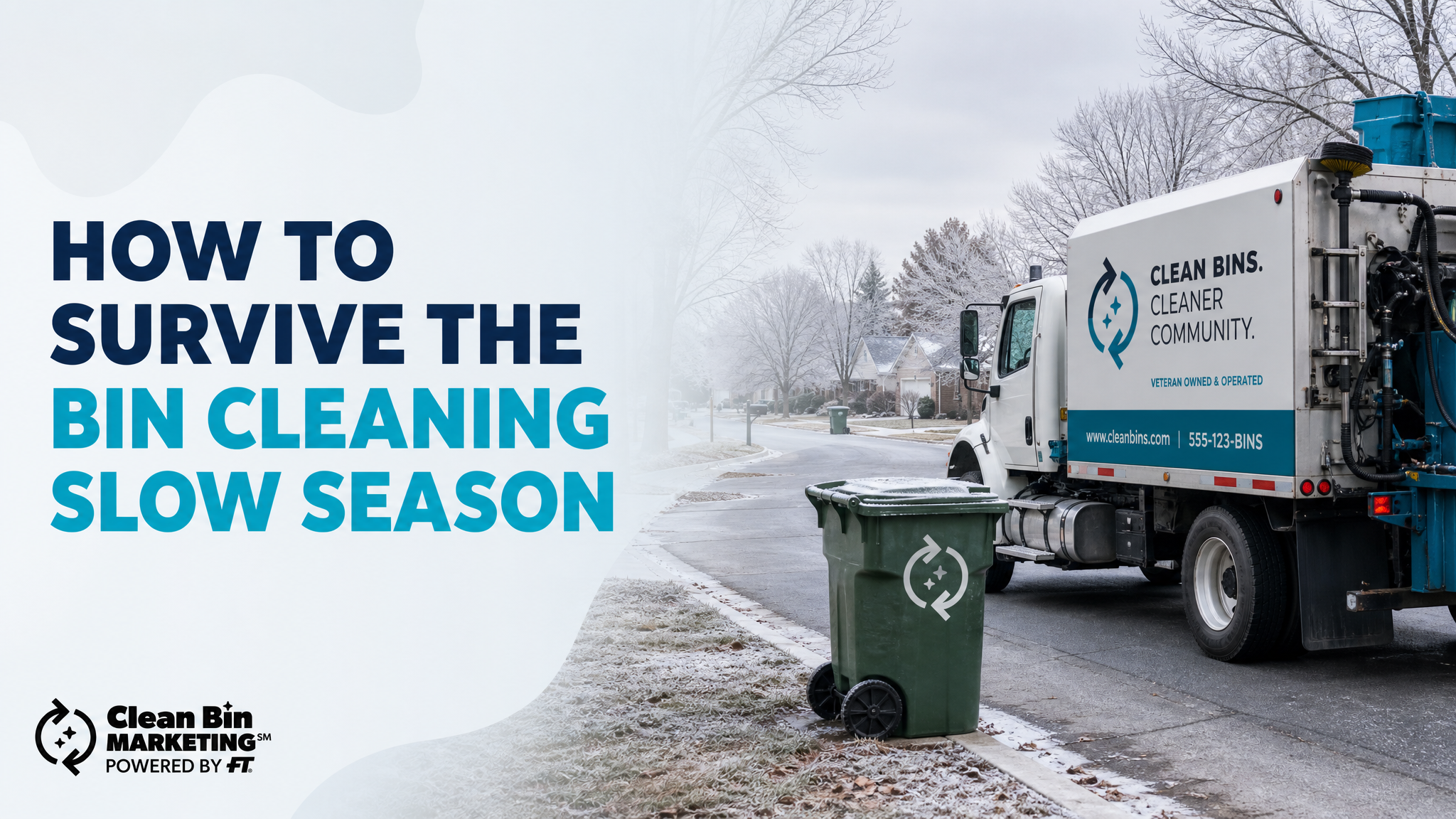
The bin cleaning slow season sneaks up on almost every route operator. One month your trucks are booked solid, and the next the phone barely rings. The bin cleaning slow season is where thin margins turn into real stress, especially if you spent the busy months buying equipment instead of banking a cushion. It doesn’t have to sink you. Handled right, those quiet weeks become the time you pull ahead of the pack. Here’s how.
Why the Bin Cleaning Slow Season Hits So Hard
Demand for bin cleaning swings with the weather and the calendar. Summer heat drives sign-ups, because bins reek in July. Winter cold kills impulse buys, because nobody’s lingering by the can. In colder states, freezing temperatures can shut down outdoor washing for weeks at a stretch. That’s the bin cleaning slow season in a nutshell: fixed costs keep rolling while revenue drops off.
The trap is treating it like bad luck. It isn’t. It’s a pattern you can predict and plan around.
There’s a second cost that hurts more than the empty calendar: cancellations. When money gets tight in winter, a one-time customer sees bin cleaning as an easy line item to drop. A homeowner who signed up in a hot July suddenly questions the charge in a cold January. That’s why the slowest months are also your highest-churn months, and why the operators who plan ahead defend their subscriber base first. Losing ten monthly customers in December doesn’t just cost you December. It costs you every month those ten would have paid all year.
Look at your own numbers. Most operators can name their two slowest months without pulling a single report. Once you know them, the dip stops surprising you. Cash flow planning matters here, and the Oregon SBDC’s guide to managing cash flow in slower months shows how to forecast the drop and build a reserve before it lands.
Seven Moves to Get Through the Bin Cleaning Slow Season
You can’t control the weather. You can control what you do about it. Work these steps before the dip, not during it:
- Push annual and prepaid plans. Offer a discount for paying 12 months up front. That cash lands before the slow stretch.
- Bank a reserve in peak months. Set aside a fixed percentage of every busy-season deposit. Aim for two to three months of fixed costs.
- Add an off-season service. Pressure washing, driveway cleaning, or holiday light installs use the same truck and keep crews paid.
- Run a subscriber-only offer. Reward recurring customers with a free extra clean so they don’t cancel when budgets tighten.
- Book spring now. Sell prepaid spring slots in January so your calendar fills before competitors wake up.
- Tighten your routes. Use slow weeks to cut drive time between stops, so every truck earns more per mile when demand returns.
- Keep marketing on. Operators who go dark in winter start spring from zero.
Do the math on just one of these. Fifty subscribers prepaying a $360 annual plan is $18,000 landing right when you need it most.
How Specialized Marketing Fuels Growth
Here’s the part most owners get wrong. They cut marketing the second bookings slow, which all but guarantees a worse spring. The bin cleaning slow season is exactly when smart advertising is cheapest, because fewer competitors are bidding for the same clicks. A generic agency won’t know that. A specialist who has run these route campaigns before will.
That’s the reason Clean Bin Marketing exists. Targeted Google Ads for bin cleaning can capture the few winter searchers who are ready to buy, at a lower cost per lead than you’ll pay in June. Meanwhile, steady SEO built for bin cleaning keeps your local rankings climbing through the quiet months, so you own page one when the spring rush hits. Many of our clients hold 20 to 50 plus leads a month by keeping the lights on year-round.
Email helps too. A short monthly note to past customers, reminding them why fresh bins matter and offering a winter reason to book, costs almost nothing and keeps your name in front of them. Add a clean, fast website that turns those clicks into booked jobs, and your quiet months start working for you instead of against you.
Marketing isn’t the thing you cut when it’s slow. It’s the thing that ends the slump sooner.
Frequently Asked Questions
Q: When does the bin cleaning slow season usually start? A: It varies by region, but most operators see the dip from late fall through winter, roughly November to February. Hot southern markets slow less and may hit their own summer lull instead. Track your two slowest months and plan around those exact dates.
Q: Should I really keep paying for ads when it’s slow? A: Yes, if the numbers work. Ad competition drops in winter, so your cost per lead often falls with it. Even a trimmed budget keeps your pipeline warm and your spring calendar filling early.
Q: What’s the fastest way to smooth out seasonal swings? A: Recurring subscribers. A book of monthly customers pays through every season, while one-time cleans dry up first. The bigger your subscription base, the flatter your slow season gets.
Don’t Just Ride Out the Slow Season
The bin cleaning slow season only wins if you let it. Build a reserve, sell prepaid plans, add an off-season service, and keep your marketing running while competitors hibernate. That mix turns your quietest months into a running start instead of a scramble. Want help keeping leads coming when the weather turns against you? Get in touch with our team through our new project page for a clear look at what it would take to fill your routes year-round. The quiet season is the best time to fix it.