The Trash Bin Cleaning Business: How the Route Model Really Works
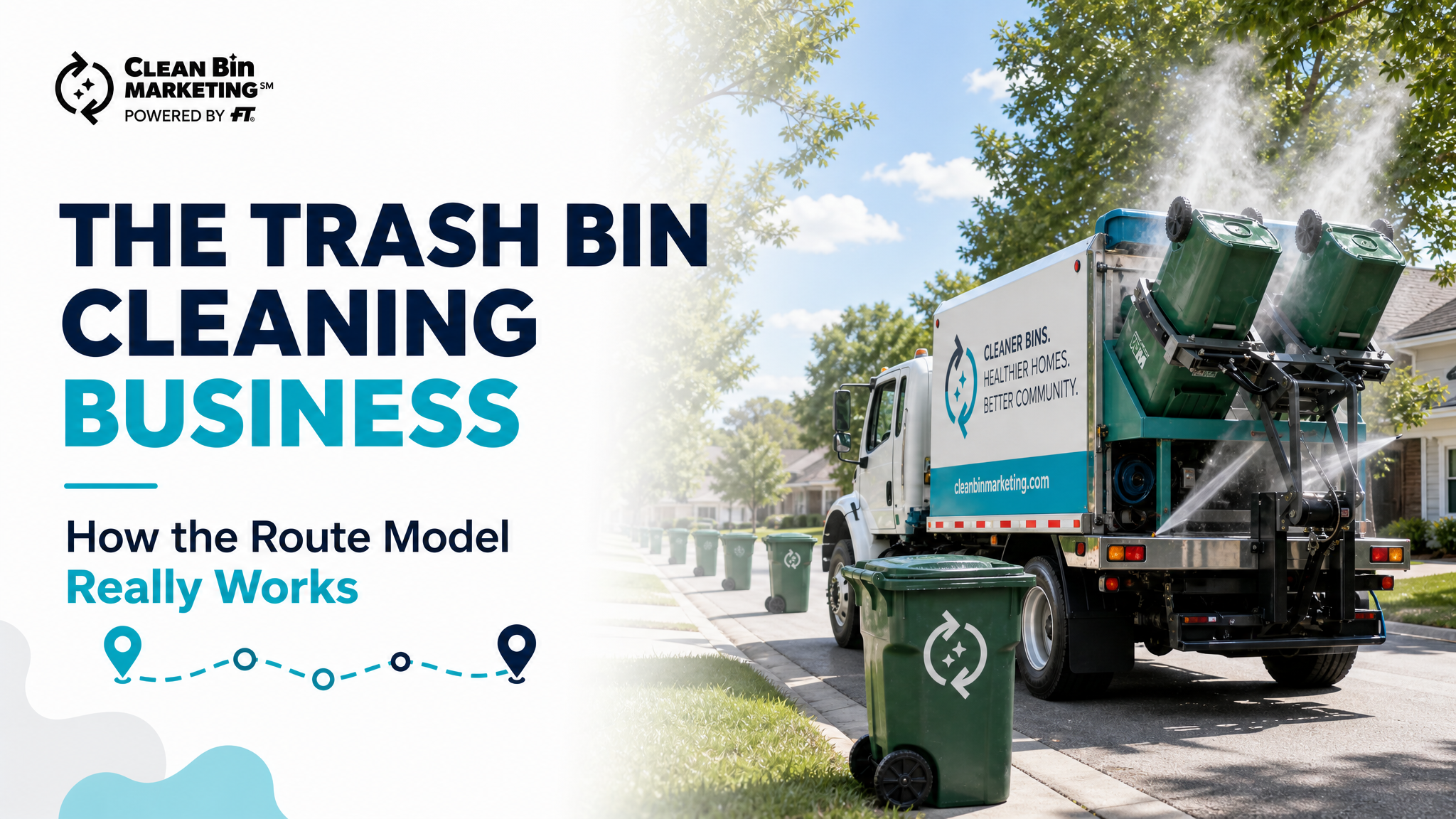
The trash bin cleaning business looks simple from the outside: show up, spray a bin, collect a check. Spend a month in it and you learn the trash bin cleaning business is really a route business, and route math is what decides whether you thrive or stall. One clean pays for gas. A tight block of recurring customers pays your mortgage. Here’s how the model actually works, and what separates the operators who fill their routes from the ones who quit by year two.
How a Trash Bin Cleaning Business Actually Makes Money
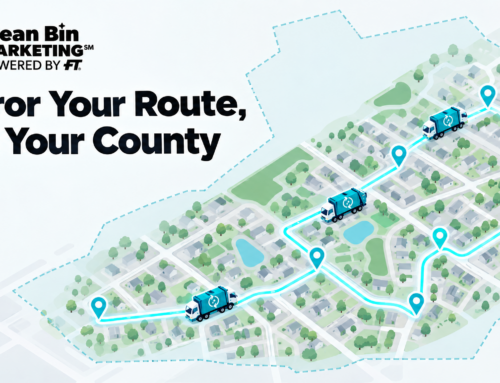
The money in a trash bin cleaning business isn’t in the one-time clean. It’s in recurring subscribers packed tightly enough that you’re not burning an hour driving between stops. Picture two operators with the same truck. One has 150 customers scattered across four towns. The other has 150 clustered in six neighborhoods. Same customer count, but the second operator finishes by lunch and doubles their daily profit. Route density decides it, even if nobody calls it that.
That’s why recurring revenue matters so much. A predictable monthly base lets you plan, invest, and borrow against steady cash flow, the same advantage SCORE highlights in its breakdown of recurring revenue for small businesses. A one-time clean is a transaction. A subscriber at $25 a month, times 200 people, is a $60,000-a-year business you can actually count on.
That predictability is what carries you through the slow stretch. In most regions the phone rings hardest in spring, then bookings can fall by half once the summer heat sets in. An operator living on one-time cleans feels every dip in the bank account. An operator with 200 subscribers on autopay barely notices, because the revenue shows up whether the customer is thinking about their bins or not. That gap is the difference between a seasonal side gig and a real company.
How to Build a Trash Bin Cleaning Business That Fills Its Routes
The operators who last don’t just clean well. They build the pipeline that keeps trucks full. Work these in order.
- Pick a tight service area first. Don’t chase customers 40 minutes away. Own a few zip codes before you expand.
- Price for recurring, not one-time. Make the monthly or quarterly plan the obvious deal so customers default to signing up.
- Get found locally. Most new customers come from a “bin cleaning near me” search, so your Google presence and local rankings decide how many calls you get. If you’re not on page one for your town, you’re invisible to most of the demand.
- Convert one-time cleans into subscribers. Follow up after every first job with an offer to put that customer on a recurring plan.
- Protect your reviews. A steady stream of five-star ratings is what tips a hesitant homeowner toward you over the guy two towns over.
Do these and the routes tighten on their own.
How Specialized Marketing Fuels Growth
Here’s the trap. Most owners in the trash bin cleaning business pour everything into the equipment and almost nothing into getting found. Then the truck sits half-booked. The rig sets your capacity; marketing decides whether that capacity earns. And this niche has quirks a generic agency misses: spring booking surges, brutal summer slowdowns, and customers who think about their bins for maybe four seconds a week.
That’s why a specialized approach pays off. Consistent local SEO that puts you in the map pack, plus a full digital marketing plan built around route density and recurring subscriptions, keeps new customers coming in the slow months instead of only during the rush. A firm that treats a bin cleaning company like any other service business can’t smooth out those swings. One that knows the route model can.
It also changes what you spend to grow. A generic agency chases clicks from anywhere; a specialist targets the exact neighborhoods where one more customer tightens a route you already drive. That’s the difference between paying to acquire a customer who costs you 30 minutes of windshield time and adding one who sits three doors from a stop you already make. Same ad dollar, very different profit.
Frequently Asked Questions
Q: Is the trash bin cleaning business actually profitable? A: It can be, but gross sales and take-home pay are two different numbers. Profit comes from route density and recurring customers, not from raw job count. Two hundred tight subscribers beat 400 scattered one-time cleans every time.
Q: How many customers do I need to go full-time? A: A rough rule: a few hundred recurring subscribers on efficient routes can support a full-time single-truck operation, depending on your pricing and drive times. The tighter your routes, the fewer customers you need.
Q: What’s the hardest part of running one? A: Filling and keeping routes. The cleaning itself is the easy part. Steady lead flow and customer retention are what make or break a trash bin cleaning business.
Ready to Fill Your Routes?
A trash bin cleaning business lives and dies on recurring customers and tight routes, and both come down to how easily local homeowners can find and choose you. The equipment is the easy purchase. The steady stream of subscribers is the hard part, and it’s the part we handle for bin cleaning operators every day. Get in touch with our team for a straight look at where your marketing stands and what it would take to keep every truck you run on a full, profitable route.